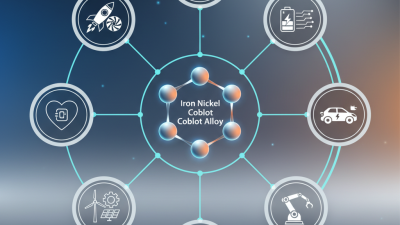
You can check out more about Nickel Cobalt Alloy, which is pretty interesting because of its unique mix of properties and versatility. Dr. Emily Thompson from Alloy Innovations mentioned, "Nickel Cobalt Alloy really changes the game for industries, thanks to its durability and resistance." It’s this kinda alloy that’s really making waves in demanding fields like aerospace and energy storage.
When it comes to stuff where strength really counts, Nickel Cobalt Alloy is a total star. Its resistance to corrosion and high temperatures means it’s perfect for turbine engines and battery parts. That combination of toughness and resilience is exactly what the tech and manufacturing world’s been craving. Of course, there are some hurdles—like the challenge of sourcing raw materials sustainably, which is no small feat.
Plus, even though the Alloy Shows tons of promise, the production process isn’t exactly cheap. It’s designed for top performance, so it might not always be the most budget-friendly option out there. As we look into all its potential applications, it’s important to think about finding that sweet spot between cost and innovation. The story of Nickel Cobalt Alloy is still unfolding, and while it has a lot going for it, there are definitely some obstacles to watch out for.

Definition of Nickel Cobalt Alloy
Nickel Cobalt Alloy is a fascinating material known for its unique properties. It consists primarily of nickel and cobalt, often blended with iron. This combination results in enhanced strength and corrosion resistance, making it ideal for various applications. The alloy exhibits excellent magnetism, crucial in electrical and electronic components.
In industries like aerospace and automotive, Nickel Cobalt Alloy is widely used for its durability and performance. Turbine engines and electrical components often rely on this alloy. The combination of nickel and cobalt allows for better heat resistance, which is essential in high-temperature environments. However, some challenges remain in the manufacturing process, such as achieving consistent Alloy Quality.
Finding the right balance between cost and performance can be difficult. While Nickel Cobalt Alloy is highly effective, it can sometimes be underutilized due to resource constraints. In addition, the alloy's properties can vary, leading to inconsistencies in application. Reflecting on these factors can help improve usage in future projects, making Iron Nickel Cobalt Alloy even more valuable in various fields.
Chemical Composition of Nickel Cobalt Alloy
Nickel cobalt alloy is a fascinating material composed primarily of nickel and cobalt. The chemical composition typically includes around 65-70% nickel and 30-35% cobalt. This balance gives the alloy excellent corrosion resistance and high-temperature stability. Other elements may also be present in small quantities, such as chromium or molybdenum. These additives enhance specific properties like strength or resistance to oxidation.
The unique properties of nickel cobalt alloy make it suitable for various applications. It is commonly used in aerospace components due to its lightweight nature and durability. In addition, parts in electronic devices benefit from its conductive qualities. However, manufacturers must consider the alloy's production process and any potential environmental impact. Balancing performance with sustainability is often a challenge that warrants reflection. The alloy’s versatility is commendable, yet one must be cautious about its sourcing and lifecycle.
Nickel Cobalt Alloy Applications and Composition
Properties of Nickel Cobalt Alloy
Nickel cobalt alloy is known for its unique properties. This alloy combines the advantages of both nickel and cobalt, making it highly versatile. It exhibits excellent corrosion resistance, which is crucial in harsh environments. This quality makes it ideal for use in chemical processing and marine applications. The alloy also boasts a high melting point, ensuring durability under extreme temperatures.
Another notable property of nickel cobalt alloy is its magnetic characteristics. It maintains its strength and stability, even when subjected to varying temperatures. This makes it useful in electronics and industrial applications, where consistent performance is essential. Furthermore, the alloy is known for its toughness. It can withstand mechanical stress, which is vital for components in engines and turbines.
However, there are challenges associated with nickel cobalt alloy. The production process can be complex and costly. Not every application justifies this expense. Additionally, while the alloy is strong, it may become brittle under specific conditions. Thus, careful consideration is necessary when selecting it for projects. Despite these imperfections, the unique properties of nickel cobalt alloy make it a valuable material across various industries.
Manufacturing Processes for Nickel Cobalt Alloy
Nickel cobalt alloy is known for its excellent strength and corrosion resistance. The manufacturing processes for this alloy are crucial in achieving these properties. One common method is vacuum induction melting, which ensures purity. This process involves heating the metals in a vacuum to eliminate any impurities. The result is a High-Quality Nickel Cobalt Alloy that performs well under various conditions.
Another technique is powder metallurgy. In this method, metal powders are blended, compacted, and then sintered. This process allows for precise control over the material properties. However, it requires careful quality control to avoid defects. Achieving uniformity can be challenging. Sometimes, the end product does not meet the desired standards.
Casting is also a prevalent method for manufacturing nickel cobalt alloys. It involves pouring molten metal into molds. While this is a traditional method, it can lead to flaws like porosity. These imperfections may affect the alloy's performance. Ensuring high-quality outcomes demands continuous refinement of techniques and attention to detail. Each approach has its own challenges, but the pursuit of innovation continues.
Applications in Aerospace Industry
Nickel cobalt alloy is a crucial material, especially in the aerospace industry. Its unique properties make it highly sought after for various applications. The combination of nickel and cobalt creates a metal that is strong, resistant to corrosion, and able to withstand extreme temperatures. These attributes are essential for aerospace components that operate under harsh conditions.
In aerospace, this alloy is often used in turbine engines. These engines require materials that can endure high heat and stress. Nickel cobalt alloy meets this demand effectively. Additionally, it is used in structures and components where lightweight and durability are critical. Such applications contribute to improved performance and fuel efficiency in aircraft.
Tip: When selecting materials for aerospace applications, consider the balance between weight and strength. Sometimes less popular materials can provide better performance.
Despite its advantages, there are challenges. The cost of nickel cobalt alloy can be high, and sourcing these metals can be complex. Not all manufacturing processes work seamlessly with this alloy. Engineers must evaluate design choices to optimize its use. This requires thoughtful planning and, at times, trial and error.
Tip: Collaborate with experts for material selection. They can provide insights that may save time and costs in the long run.
What is Nickel Cobalt Alloy and its Applications? - Applications in Aerospace Industry
| Property | Nickel Cobalt Alloy | Typical Application |
| Corrosion Resistance | Excellent | Aerospace Fasteners |
| Tensile Strength | High | Landing Gear Components |
| Weight | Lightweight | Aircraft Structures |
| Thermal Stability | High | Engine Components |
| Magnetic Properties | Moderate | Sensor Applications |
Uses in Electronics and Battery Technology
Nickel cobalt alloy is gaining attention in electronics and battery technology. This alloy has unique properties, making it suitable for various applications. It is known for its excellent conductivity and resistance to corrosion. These traits are critical in the manufacturing of electronic components.
In battery technology, nickel cobalt alloys play a significant role. They enhance energy density and prolong battery life. Many electric vehicles and portable devices benefit from these alloys. The combination of nickel and cobalt allows for better charge retention. This is essential for efficient energy usage. However, challenges remain in balancing cost with performance.
Moreover, the growth of renewable energy solutions is pushing the demand for High-Quality Iron Nickel Cobalt Alloy. This reflects a shift toward sustainable options. But, users must be cautious. Not all applications will yield optimal results. Each scenario requires careful consideration. Balancing efficiency, cost, and sustainability is necessary for future advancements.
Future Trends and Innovations in Nickel Cobalt Alloys
The future of nickel cobalt alloys looks promising, driven by technology and innovation. Reports indicate a rising demand for these materials, especially in the energy storage sector. Battery technology is evolving rapidly, and nickel cobalt alloys are crucial for high-performance batteries.
With the global push for renewable energy, the need for efficient energy storage solutions is critical. Analysts predict a significant growth rate of about 15% in the battery market over the next five years. This presents opportunities for Nickel Cobalt Alloy Manufacturers. They are expected to refine their processes to produce lighter, more efficient alloys.
Sustainability poses a challenge. Extraction and processing can be damaging to the environment. There are ongoing discussions on how to make the process cleaner and more efficient. Innovations aimed at recycling these alloys are gaining traction. These advancements could lead to circular economy practices in the industry.
Exploring the Exceptional Qualities and Applications of High-Purity Nickel Alloy N02200 in Advanced Industries
High-Purity Nickel Alloy N02200 stands out as a vital material for advanced industries, thanks to its exceptional qualities that cater to demanding environments. Engineered specifically for high performance, this nickel alloy boasts remarkable resistance to both corrosion and elevated temperatures, making it indispensable in critical sectors such as chemical processing, aerospace, and electronics. Its unique properties ensure that it maintains integrity and functionality even in hostile conditions, enabling engineers to design systems that operate reliably over extended periods.
Moreover, the exceptional thermal and electrical conductivity of Alloy N02200 enhances its applicability across various engineering challenges. The alloy not only supports efficient operation but also contributes to significant energy savings in applications where thermal management is crucial. Additionally, the mechanical strength inherent in Alloy N02200 allows components made from this material to endure high-stress situations without compromise. As industries continue to push the boundaries of technology, the adoption of high-purity nickel alloys like N02200 affirms their role in fostering innovation and achieving unprecedented performance outcomes in sophisticated designs.
FAQS
: Nickel cobalt alloy has excellent conductivity and corrosion resistance, making it suitable for electronics.
It enhances energy density and prolongs battery life, improving charge retention for devices and electric vehicles.
Users must assess efficiency, cost, and sustainability. Not all applications will yield optimal results.
Yes, demand is rising, particularly in the energy storage sector, driven by renewable energy initiatives.
Sustainability is a key concern. Extraction and processing can harm the environment, requiring cleaner methods.
Innovations in battery technology and recycling practices are expected to drive growth and efficiency improvements.
Analysts predict a growth rate of about 15% over the next five years, increasing the demand for these alloys.
Innovation is crucial for creating lighter, more efficient alloys and improving battery performance.
Yes, the environmental impact of extraction and processing is concerning, prompting discussions on sustainability.
Circular economy practices aim to recycle materials to reduce waste and environmental impact in the industry.
Conclusion
Nickel Cobalt Alloy is a versatile material composed mainly of nickel and cobalt, offering a unique combination of desirable chemical and physical properties. These alloys are characterized by their excellent corrosion resistance, high-temperature stability, and impressive mechanical strength, making them suitable for various demanding applications. The manufacturing processes of Nickel Cobalt Alloy typically involve methods such as casting, forging, and powder metallurgy, which allow for the production of components tailored to specific needs.
In the aerospace industry, Nickel Cobalt Alloys are utilized in components that require high performance under extreme conditions, such as turbine engines and exhaust systems. Additionally, their conductivity and durability make them ideal for use in electronics and battery technology, where reliability is paramount. With ongoing research and development, the future of Nickel Cobalt Alloys looks promising, as innovations continue to enhance their properties and expand their applicability across various sectors.